



.png?width=105&height=85&name=ODW_Icon_Food_Bev%20(1).png)
-1.png?width=151&height=85&name=ODW_Icon_ConsumerGoods%20(1)-1.png)
.png?width=139&height=85&name=ODW_Icon_Industrial%20(1).png)




.png?width=96&height=100&name=ODW_Icon_CaseStudy-v2%20(1).png)
.png?width=153&height=100&name=ODW_Icon_Blog3%20(1).png)
.png?width=100&height=100&name=ODW_Icon_NewsPress3%20(1).png)
.png?width=162&height=100&name=ODW_Icon_Video3%20(1).png)
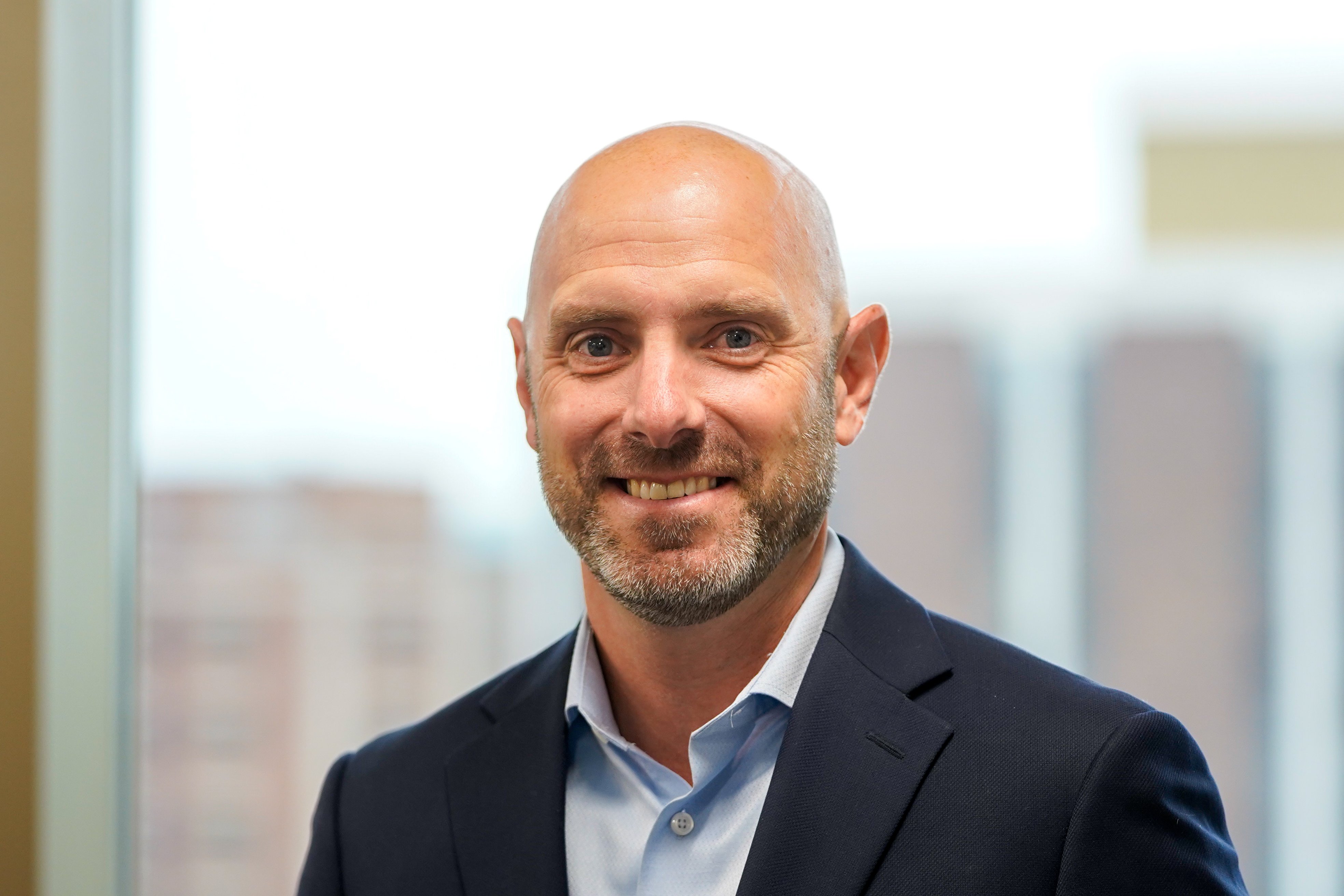
Philip Schmidbauer, VP, client solutions and success, ODW Logistics, was named the overall winner of the Top Transportation Innovators category for this year’s Pros to Know award.
Phil Schmidbauer sits at the intersection of transportation strategy, analytics, technology, and customer value realization. Serving as VP, client solutions and success for ODW Logistics, he's responsible for translating complex transportation challenges into scalable, executable solutions that drive cost reduction, service improvement, and risk mitigation for shippers.
On a day-to-day basis, he leads solution design and external pricing for transportation engagements; oversees customer-facing analytics; owns customer onboarding and implementation alignment; partners closely with account management teams to drive retention, expansion, and long-term value realization for strategic customers; collaborates with sales and executive leadership to develop differentiated proposals; and serves as a trusted advisor to customers on emerging transportation risks.
Schmidbauer's role is not transactional; it is highly consultative and outcome-driven, with accountability for both winning new business and ensuring customers realize the promised value after implementation.
That's why he bridges analytics, operations, and commercial strategy, and designs solutions with a deep understanding of operational realities.
Previously, he served as senior director, analytics and solutions at ODW Logistics until he was promoted to his current position in November 2024. Earlier, he built commercial and customer-facing experience as a national account executive at XPO Logistics and led operational improvement work as a lean project manager at Con-way, Inc. and manager, lean logistics at LeanCor. He is known for ensuring that new tools, optimization models, and analytics actually change behavior and deliver measurable outcomes. And, his leadership in onboarding, value realization, and ongoing solution alignment ensures customers see real improvements in cost, service, and risk, not just dashboards.
Looking ahead to the next 12 months, Schmidbauer is focused on advancing transportation innovation by elevating solution-led transportation models; expanding the use of predictive and prescriptive analytics; strengthening freight fraud and risk mitigation frameworks; enhancing onboarding and value realization discipline; and developing next-generation transportation-value storytelling.
Schmidbauer sits down with Marina Mayer, editor-in-chief of Food Logistics and Supply & Demand Chain Executive and co-founder of the Women in Supply Chain Forum, to talk about the importance of bridging analytics, operations and commercial strategy.
Supply & Demand Chain Executive: Let’s first talk about you. Tell me a little bit about yourself and your journey to get to this current stage in your career?
Philip Schmidbauer: I truly believe hard work is the foundation of success. I’ve had a job since I was 10 years old, when I started as a paperboy back in Michigan. My parents instilled a work ethic in me from a young age and taught me key life lessons which hold true today. Throughout my career, I’ve had the pleasure of working for some phenomenal leaders who have taught and inspired me. Tough customers have sharpened my skills, and honest mentors have helped me get better every day.
I’ve had a well-rounded background from automotive logistics and learning the “Toyota Way” to applying those learnings and gaining additional insights from every career stop along the way.
My personal mindset is to build bridges – not tear them down. I’m a passionate individual and believe relationships are the foundation of our purpose on this planet. I treasure the relationships I’ve built during my career and life and look forward to those I’ve not yet experienced. Loving my work is simply a byproduct of who I am.
Supply & Demand Chain Executive: One of the achievements outlined in your submission is your ability to bridge analytics, operations, and commercial strategy. What does this entail? And, why is this important to the transportation sector?
Schmidbauer: I believe balance is important throughout life – not just in my work. Being able to use analytics and data to support decision-making is critical in most sectors of life. Commercial strategy is how that value gets collaboratively returned to the business stakeholders. I learned long-ago how to deliver value to customers – as seen by the customer. Any solid business relationship is sustained when that value is created for both the provider and the customer. A strong operation delivers the value, the commercial strategy finances it and collaborative relationships using analytics will help continually improve on that value.
Supply & Demand Chain Executive: Also outlined in your application is how you’ve been a leading voice in eliminating waste and turning supply chains into a strategic weapon for shippers. What are 3-5 ways companies can begin eliminating waste in their supply chain?
Schmidbauer: I think the first step is about culture. It’s imperative you’re ready to listen and hear about the waste. When leadership gets upset hearing about a problem, it disincentivizes employees from identifying more problems. Once you’re ready to listen, I believe engagement of the workforce is the most organic way to improve.
People want to feel valued – if you listen and empower them to solve problems, organic improvements will happen. Another key is investment in standardization. It’s not sexy or fun, however, building solid process allows for the measurement of your improvement and sustainability of positive changes.
People are valuable – no doubt – but allowing certain individuals to hold up an organization with their tribal knowledge is not sustainable.
Finally, I feel companies need to build solid relationships to complement their core competencies. Build and leverage trusting relationships with companies who support your vision and enhance your ability to get better.
Supply & Demand Chain Executive: Some of the goals outlined in your nomination form are to elevate solution-led transportation models, expand the use of predictive and prescriptive analytics, strengthen freight fraud and risk mitigation frameworks, enhance onboarding and value realization discipline, and develop next-generation transportation value storytelling. What does all of this look like? What does this entail?
Schmidbauer: Perhaps the hardest part of all of this is simplifying the complexities of supply chains. Ultimately, it’s about driving value to the end consumer – simplifying complex networks, helping customers achieve cost & service targets, while keeping their supply chains secure. I truly believe there will never be an end-result – rather it will be an ever-changing chase for perfection. This will entail evolving teams of people working together toward clear and measurable goals. Certainly, it will require the perfect combination of people, process and technology as the chase for perfection continues …
Supply & Demand Chain Executive: The Top Transportation Innovators category recognizes professionals in the transportation space. What advice do you have for other transportation professionals and even those young professionals just entering the transportation space?
Schmidbauer: My advice to all professionals is to be curious. Respect the perspective and work of those who have built the current foundation, but let’s continue the journey to make things better. As a young professional, I had to learn my strengths and weaknesses – many times the hard way. I got feedback. I became my own worst critic, and I worked hard on myself. We’re flawed individuals, deal with it and work to get better. I lost my father as an 18-year-old college freshman, but I’ll never forget the last time I talked to him. He told me, “Whatever you decide will be the right decision for you. Just give it your all.” I think that’s solid advice to share with others.
Supply & Demand Chain Executive: What are some things not addressed above that would be pertinent to include in the article detailing your strengths, achievements, overall goals, etc.?
Schmidbauer: I think the most undervalued thing I’ve learned over time is to surround yourself with people who complement you. I have worked with and for some amazing people. I’ve been lucky to build very talented teams who do great work. I’m a coach at heart – I get that from my parents. My achievements are simply a reflection of the talents and gifts others have shared with me over time. My goals are the ROI and my way of saying “Thank You” to those who have built me up over time.
CLICK HERE to view the full list of winners.

RECENT POSTS
By ODW Logistics
Oct. 22, 2026 16:08 PM
Most retail suppliers lose transportation margin right as they start winning more shelf space. The playbook that worked ...
Oct. 20, 2026 16:29 PM
Enterprise shippers evaluating in-house versus managed transportation typically anchor on one number: the quoted fee fro...
Oct. 20, 2026 16:26 PM
.png)