

.png?width=105&height=85&name=ODW_Icon_Food_Bev%20(1).png)
-1.png?width=151&height=85&name=ODW_Icon_ConsumerGoods%20(1)-1.png)
.png?width=139&height=85&name=ODW_Icon_Industrial%20(1).png)





.png?width=96&height=100&name=ODW_Icon_CaseStudy-v2%20(1).png)
.png?width=153&height=100&name=ODW_Icon_Blog3%20(1).png)
.png?width=100&height=100&name=ODW_Icon_NewsPress3%20(1).png)
.png?width=162&height=100&name=ODW_Icon_Video3%20(1).png)

.jpg?width=211&height=185&name=Gary%20Meador%20(1).jpg)
Gary Meador, Chief Operating Officer, ODW Logistics
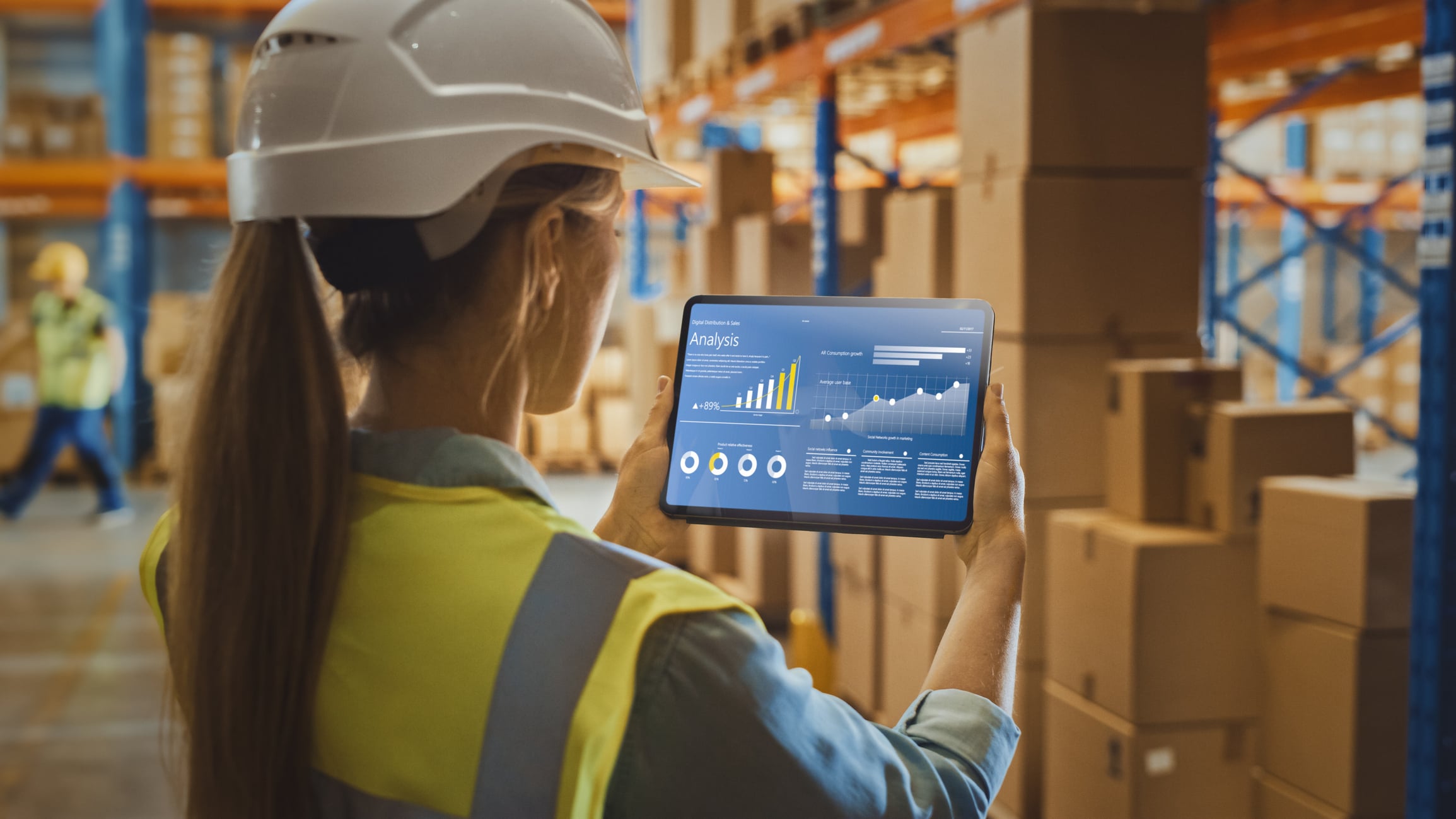
Analyst Insight: The deployment of robotics in the warehouse is moving from small pilots to incorporation into essential operations. Autonomous mobile robots (AMRs) are taking on e-commerce picking; computer vision is tightening dock flow and safety, and AI digital twins are giving teams near real-time visibility for planning. The result is a practical blend of people and machines that improves accuracy, speed and flexibility for customers, while controlling cost.
Three shifts are defining the next stage of automation. First, AMR adoption is expanding across high-mix fulfillment as operators pursue consistent throughput and inventory accuracy. Analysts still project multi-year growth for mobile robots, even as near-term forecasts adjust to tariffs and macro uncertainty. Automation-savvy teams manage robots as shared fleets that coordinate routes, charging, and handoffs with people through one orchestration layer.
Second, computer vision is moving from experimental to commonplace. When video analytics connect to yard and appointment systems, operators can verify loads, spot unsafe behaviors, and identify bottlenecks early. Published case material cites gains in dwell time, scheduling and incident prevention, which together support tighter downstream planning and better service.
Third, digital twins are becoming operational tools rather than models on a slide. Twins mirror facilities and flows, let teams run scenarios, and align warehousing with transportation decisions. Industry write-ups and research point to service and working capital benefits when twins are tied to forecasting and execution systems that translate signals into schedules.
These shifts change how labor, space and data work together. The old people-and-pallets mindset is giving way to hybrid operations, where people focus on exceptions and quality while machines handle repetitive tasks. The most reliable gains come from partnership discipline. Start with a clear problem and a simple business case that tests fit, scalability and payback before any spend. Build change management into the plan. Engage associates early, train for new roles, and align metrics so teams view automation as a tool that helps them win the day. Validate pilots with 30-, 60-, and 90-day reviews for safety, quality and throughput, so expansion is tied to results customers feel.
Design should reflect customer priorities. Cost control, flexibility, reliability and speed belong in the spec. Favor solutions that can be shared across multiple customers inside a building so benefits scale without eroding service. Reduce lock in with interoperability. Open standards such as VDA 5050 and the MassRobotics AMR Interoperability Standard help mixed fleets work together and protect long-term investment.
Customers should also weigh the investment's risk and durability. Ask for clear data governance, uptime commitments, and transparent ROI tracking. Pair twins with forecasting to test scenarios and synchronize decisions across warehousing and transportation. The goal is consistent service that adapts to new SKUs, packaging and volume swings.
Outlook: Through 2026, robotics will be designed into the network, not added at the edges. Expect AMRs, vision and twins to run under a common orchestration layer with standard key performance indicators, interoperable fleets, and direct ties to S&OP. Market observers still point to disciplined investment across warehousing and cold chain, as operators scale for speed, safety and resilience.
Resource Link: https://www.supplychainbrain.com/articles/43304-the-customer-centered-path-to-warehouse-automation


RECENT POSTS
By ODW Logistics
Oct. 22, 2026 16:08 PM
Most retail suppliers lose transportation margin right as they start winning more shelf space. The playbook that worked ...
Oct. 20, 2026 16:29 PM
Enterprise shippers evaluating in-house versus managed transportation typically anchor on one number: the quoted fee fro...
Oct. 20, 2026 16:26 PM

.png)